
Jeu Solved Nonmanufacturing costs include assembly-line worker

By considering different perspectives, utilizing cost allocation methods, and conducting in-depth analysis, organizations can make informed decisions to optimize their operations and improve profitability. On the other hand, a product with a low gross profit may https://www.bookstime.com/articles/epayables actually be very profitable, if it uses only a minimal amount of administrative and selling expense. These costs are not directly tied to the production of goods or services, but rather to the overall operation of the company.
- Therefore, businesses typically establish and adhere to their own criteria.
- By analyzing these components, service providers can make informed decisions and enhance their overall performance.
- These costs have two components— selling costs and general and administrative costs —which are described next.
- Direct labor refers to salaries and wages of employees who work to convert the raw materials to finished goods.
- Examples include wood in furniture, steel in automobile, water in bottled drink, fabric in shirt, etc.
- Examples of indirect materials (part of manufacturing overhead) include glue, paint, and screws.
Only 2 GST Rates Now – Relief for Consumers and Businesses
In summary, the section on “Cost Measurement Techniques for Service Industries” explores approaches such as activity-based costing, time-driven activity-based costing, customer profitability analysis, and cost benchmarking. These techniques help service industries gain insights into their cost structures, optimize resource allocation, and make informed business decisions. To begin, it is important to understand that cost measurement in service industries differs from traditional manufacturing costing methods. Service industries often involve intangible elements and unique cost drivers. Inventory in a manufacturing company is items purchased (or created) by a company for (a) production of other parts (raw materials or work-in-process) or (b) selling to customers (finished goods). The two broad categories of costs are manufacturing costs and nonmanufacturing costs.
Top 5 Career Options for Accounting Graduates
- Service industries often involve intangible elements and unique cost drivers.
- Net sales for 2010 totaled $57,800,000,000, resulting in operating profits of $6,300,000,000.
- One of the main financial statements (along with the statement of comprehensive income, balance sheet, statement of cash flows, and statement of stockholders’ equity).
- However, as we noted earlier, managerial accounting information is tailored to meet the needs of the users and need not follow U.S.
- Usually financial statements refer to the balance sheet, income statement, statement of comprehensive income, statement of cash flows, and statement of stockholders’ equity.
- Figure 2.4 shows examples of production activities at Custom Furniture Company for each of the three categories (we continue using this company as an example in Chapter 2).
- Manufacturing costs initially form part of product inventory and are expensed out as cost of goods sold only when the inventory is sold out.
Product costs are assigned to an inventory account on the balance sheet, initially. When finished goods are sold, the cost of goods sold is transferred to the income statement (expensed) and matched with the sales revenue. As product costs are assigned to inventory accounts initially, sometimes they are called inventoriable costs. MasterCraft records these manufacturing costs as inventory on the balance sheet until the boats are sold, at which time the costs are transferred to cost of goods sold on the income statement. Examples of selling costs for PepsiCo include television advertising (probably the biggest piece of the $22,800,000,000), promotional coupons, costs of shipping products to customers, and salaries of marketing and advertising personnel.

Manufacturing Overhead
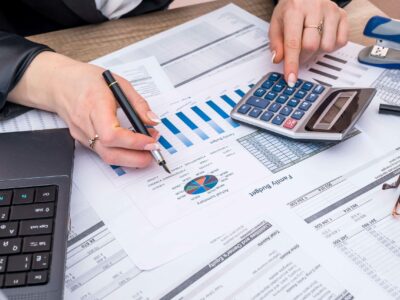
Entities may manufacture several types of products and the sum total of all the costs involved in producing those products is termed as manufacturing cost. The sum of direct labor cost and manufacturing overhead cost is known as conversion cost. The sum of direct materials cost and direct labor cost is known as prime cost.
- By assigning costs based on the time spent on each activity, organizations can better assess the cost-efficiency of their service processes.
- Overall, so far we have covered different types of product (manufacturing) and period (nonmanufacturing) costs.
- Direct labor includes the production workers who assemble the boats and test them before they are shipped out.
- Under the accrual basis of accounting, the matching is NOT based on the date that the expenses are paid.
- For the past 52 years, Harold Averkamp (CPA, MBA) hasworked as an accounting supervisor, manager, consultant, university instructor, and innovator in teaching accounting online.
- The inventory of a manufacturer should report the cost of its raw materials, work-in-process, and finished goods.
Analyzing Overhead Costs in Service-Based Organizations
Materials that become an integral part of the finished product and that can be easily traced to it are called direct materials. Direct materials usually consists of a significant portion of total manufacturing cost. Remember, the choice of allocation method depends on the organization’s specific needs, available data, and management’s preferences.
- They are impacted by different factors and thus their appropriate categorization is important.
- Costs that are not related to the production of goods are called nonmanufacturing costs23; they are also referred to as period costs.
- Nonmanufacturing overhead costs are the company’s selling, general and administrative (SG&A) expenses plus the company’s interest expense.
- Product costs are assigned to an inventory account on the balance sheet, initially.
- The income statement reports the revenues, gains, expenses, losses, net income and other totals for the period of time shown in the heading of the statement.
The sum of direct materials cost, direct labor cost and manufacturing overhead cost is known as manufacturing cost. Understanding non-manufacturing costs is essential for effective financial management. By analyzing these nonmanufacturing costs costs, organizations can make informed decisions, allocate resources efficiently, and improve overall performance. Remember that non-manufacturing costs are not just expenses—they represent investments in the organization’s growth and sustainability. Examples of general and administrative costs include salaries and bonuses of top executives and the costs of administrative departments, including personnel, accounting, legal, and information technology.

As mentioned above, nonmanufacturing costs cannot be included in inventory or the cost of goods sold; rather, nonmanufacturing costs are reported as SG&A expenses and Interest Expense in the accounting period in which they occur. Non-manufacturing costs include those costs that are not incurred in the production process but are incurred for other business activities of the entity. These costs do not specifically contribute to the actual production of goods but are essential to ensure overall functioning of the business. For accounting purposes, nonmanufacturing costs are expensed periodically (typically in the period they are incurred). However, for management objectives, managers frequently require the assignment of nonmanufacturing costs to goods.
Nonmanufacturing Overhead
From the perspective of activity-based costing (ABC), one approach is to identify cost drivers specific to service activities. These cost drivers can include factors such as the number of customer interactions, service hours, or the complexity of the service provided. By allocating costs based on these drivers, organizations can gain a more accurate understanding of the true cost of providing a service.
These costs are reported on a company’s income statement below the cost of goods sold, and are usually charged to expense as incurred. Since nonmanufacturing overhead costs are treated as period costs, they are not allocated to goods produced, as would be the case with factory overhead costs. Since they are not allocated to goods produced, these costs never appear in the cost of inventory on a firm’s balance sheet. Analyzing overhead costs in service-based organizations is essential for understanding the total cost of providing services or performing functions.
The inventory of a manufacturer should report the cost of its raw materials, work-in-process, and finished goods. The cost of inventory should include all costs necessary to acquire the items and to get them ready for sale. Nonmanufacturing overhead costs are the company’s selling, general and administrative (SG&A) expenses plus the company’s interest expense. While depreciation on manufacturing equipment is considered a manufacturing cost, depreciation on the warehouse in which products are held after they are made is considered a period cost. While https://dt-rwetestlink.co/professional/what-are-examples-of-current-liabilities-3/ carrying raw materials and partially completed products is a manufacturing cost, delivering finished products from the warehouse to clients is a period expense.
